Tuesday, January 29, 2013

English: Where Are You Not At?

A. The word assassin derives from the Arabic Word hashashin.

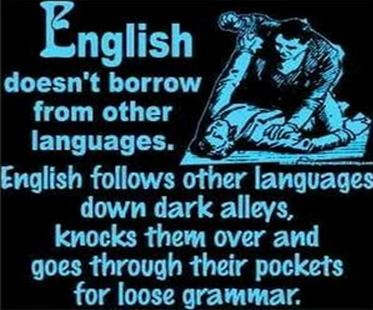
B. The English Lexicon is large with over a million words in the dictionary and takes root words from many languages around the world.

C. Recognizable prefixes: pre-, anti-, dis-, multi-, super-, and re-. Suffixes: -able, -ize, -ate, and -ive.

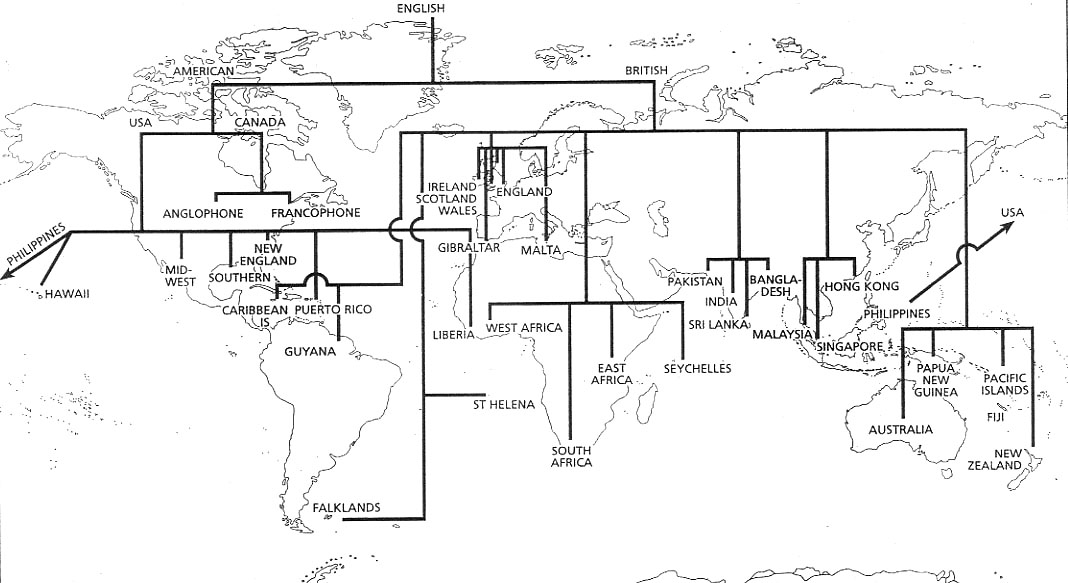
D. Neologistic borrowings entered the English language in the eighteenth and nineteenth centuries because it was a time in which technology and cultures had spread from Britain and the United States to other continents. This created mixture of languages, new technological/scientific terminologies, and communication between different cultures. 

E. The language will maintain an empire together with unity and tradition. It also identifies who belongs to what empire because of its linguistic characteristics.

F. I think that language helps populations identify to which region or place they belong to even in the twenty-first  century. It could unify people but not as strongly as in the past as language has spread around most part of the world.  


Sunday, January 27, 2013

Linguistic Quests


Whoa, it's as if we traveled forward in time from the 80's to the 2000's in a matter of days. Also, we're not listening to a story of English but an adventure. What time does to some stuff. Anyway The Adventure of English brought us examples of people who already had enough of common people speech and wanted a proper way of speaking.

Firstly we have John Locke, after surviving a plane crash and magically gaining strength in his legs... Right wrong one. Locke wrote an essay believing in that if all misunderstandings were removed, there would be no more conflicts. It could be done. How many times have there been bar fights because someone misunderstood someone else? Plenty.


As seen from 1:10 onward we can see how misunderstanding can lead to conflict. Seeing from that point we can agree if there was more understanding between people then such consequences won't occur. Though could it solve wars and other deeper conflicts? No. I guess Locke only wanted a language in which everyone understood each other with no mistakes. It seems that idea will always seem unreachable as everyday language seems to change and society not quite keeping up with it.

After that we have Jonathan Swift and Samuel Johnson. Both wanted to improve Standard English and have done everything possible such as setting up institutions for language and coming up with the first dictionary. They were worried slang would change the English language and have some sort of base in which everyone would have to follow. Though sadly, they weren't so lucky as their idea of the perfect English was not approved by everyone and sought to be too archaic. We can relate to this now a days as there has been an increase in slang in the last few years. These include words founded in music, games and movies. If you think about it, most of them came from the media.

Finally there is Robert Burns and William Wordsworth who completely disregarded the guys' theories mentioned above. They wrote poems (pronounced "perms" in the video) in the Scottish dialect. Both showed and helped Scottish thrive after constant batter for English to be only used in Britain. Wordsworth said there was no need for a deep poetic diction since poetry could be written in the mans common tongue.

There is so much to talk about in language. It’s hard to say what the future brings to English as its uncontrollable and always changing. Without a doubt, there will always be more words inserted into the language and some won't be heard of again.


Thursday, January 17, 2013

I Do Declare

Influence in North America not only came from Britain, but from Africa a couple of centuries later. It's funny how the United States had evolved into what it is today from their rulers to their workers. Immigration seemed unstoppable, even if it was forced, for the U.S and brought new advances to the culture of the people. Descendants from Africa mixed in the growing population of the East Coast and with it it brought new dialects and pidgins of the English language. It was mostly forced do to the mix between African and American cultures.

"Even though I'm Nigerian, I can understand the pidgin. It sounds so much like Nigerian pidgin :)" Uche N comments on the close relationship between Gullug and Nigerian. This is an example of how African languages, such as Nigerian, and English are combined into an english dialect which unfortunately is dying. Of course the rise of these dialects across the south and the east of the U.S was mostly for communication between the masters and themselves. Though other dialects and pidgins were created for recreational reasons, such as signing and story telling while tending the tough plantations.

Eventually African Americans surged into an era that influenced American culture forever. Their lavish songs made it into white folks ears in the early twentieth century. The famous Blues came to be known and resembled the lifestyle of the working class in the South at that time, the African Americans. These contained their slang and colloquialisms, many which are still used today. “The speech in music became more popular.” (The Story of English). Such popularism became important as it was quickly picked up around the nation and eventually across sees. 

Seems I have jumped a few years in this blog. Ultimately without pidgins and dialects from the African Americans, I wouldn't be able to enjoy the fine music from the 50's. 


Monday, January 14, 2013

Gonnae, Leavin', Tint

It is sad tae see hoo languages oan yer bike in th' middle ay time as cultures jist forgit abit them. th' evolution ay leid destroys an' creates. Ah guess there's nae room fur aw th' languages. scootlund has bin huir uv a important fur britain as it shares history in politics an' in leid. thocht ben time, everythin' changes. scootlund eventually becomes part ay th' british empire an' ye auld scottish isnae widely spoken anymair. sassenach can be a bummer. noo as it seems thaur is only a body bodie alife tae thes day, ur in th' 80's, 'at kent almost aw th' scottish folk stories. Ah can imagine th' pressure 'at bloke has tae feel tae bide oan.

Ah hae recently reid an article describin' hoo an ancient leid is becomin' extinct coz thaur ur only tois fowk remainin' fa can spick it. "the leid ay ayapaneco has bin spoken in th' lain noo knoon as mexico fur centuries. it has survived th' spanish conquest, seen aff wars, revolutions, famines an' floods. but noo, loch sae mony other indigenoos languages, it's at risk ay extinction."(Language at Risk of Dying out - the Last Two Speakers Aren't Talking)* jist unbelievable hoo coontless ay languages ur bein' spoken less an' less coz ay its lack ay importance. thes is jist a body ay mony hundreds 'at in th' up comin' years micht ne'er be heard ay again.

Mebbe thaur is a difference atween scootlund an' mexico thocht they suffer frae a common problem, extinction ay languages. scottish seems huir uv a important fur th' coontry men as it has a vest history behin' it. it woods be a sham tae lit it disappear.

Guid cheerio the nou!

*Tuckman, Jo. "Language at Risk of Dying out - the Last Two Speakers Aren't Talking." The Guardian. Guardian News and Media, 13 Apr. 2011. Web. 15 Jan. 2013.


Sunday, January 13, 2013

History Repeats Itself

I was proven wrong after seeing the second episode of The Story of English. It seems we'll be covering everything the English language has gone through. We can see similarities between languages as they share the same roots. Spanish, Italian, French, and Portuguese all come from latin making it easy for native speakers of one latin decedent language to learn another. Though, where did English come from. Well the good friends from Northern Europe helped colonized the celtics in Britain and bringing up what today we consider the most widely spoken language in the world. The Anglo-saxons just had to kill some natives and claim the land theres but it was worth it. Hey haven't we seen that in another occasion?

After six-hundred years after the Anglo-saxon's conquered Britain, The British Empire conquered North America. English has made a transition between location to location. Although the english spoken in North America isn't as distant from Britain as it was from Britain to the Saxon's, we still see some differences. Words such as "color" in North America is written "colour" in Britain. There are tons of other examples. I would like to see if North Americans will some day introduce english to other parts and see the change it has. Oh wait, they already have.


The Story of English. Dir. Robert MacNeil, Robert McCrum, and William Cran. BBC, 1986. 27 Aug. 2009. Web. 13 Jan. 2013.

Saturday, January 12, 2013

The Most Common Letter in English is "E".

It was interesting to see a documentary about a language with a rich history of about 1000 years, but focusing on its recent influences. The Story of English displayed its importance to the modern world after centuries of being created. The world has seen many changes in society in just a mere century. These changes brought new ways of sharing and communicating between every corner of the world.
It seems that the english language has evolved into a universal language for many functions. It's the official language for aeronautical, and maritime communications. Such so, "So when an italian pilot, flying an italian plane, into italian airspace, contacts italian ground control speaking only in english." (The Story of English). Flying is one of the most common means of transportations and allows cultures from countries to interact between others. Because of so much diversity a common-spoken language was necessary for pilots and control towers to communicate.

Having the accessibility to travel and share, varieties of the english language are mixed up and evolved as people leave their past. Though what is the right variety of the english language. According to The Story of English, Oxford english is the correct way of speaking the language. I truly do not believe there is a correct way of speaking english. Well pronouncing words in a understandable way and with a proper syntax is a correct way of speaking, but there is no correct accent. The important aspect of speaking english is that it is understandable to whomever is trying to understand.


The Story of English. Dir. Robert MacNeil, Robert McCrum, and William Cran. BBC, 1986. 27 Aug. 2009. Web. 13 Jan. 2013.