After describing the consequences the Clutter's murder brought to their friends and family, Capote now turns to describe the events involving Dick and Perry. I found it interesting to see the instant change of location and atmosphere when Capote writes, “Approximately four hundred miles east of where Arthur Clutter then stood, two young men were sharing a booth in Eagle Buffet, a Kansas City diner.” (89). This sudden change impacted me suddenly while I was still reacting towards Susan's and Bobby's reactions toward their loss. I think Capote tries to show how even though they are some miles apart, they are pretty close when it comes to having something in common, the murder.
Continuing through the story, Capote unfolds characteristics of the suspected murderers. We get to find out who is the more leader out of them both, when Perry says, “Anyway, I don’t believe it. Neither do you. Own up, Dick. Be honest. You don’t believe this no-clue stuff?” (89). Here, one can see that Perry is the dominant individual of the two. Though it is interesting to see how Perry, even though being dominant, has an insecurity when Capote states, "Dick ordered another hamburger. During the past few days he'd known hunger that nothing- three successive steaks, a dozen Hershey bars, a pound of gumdrops- seemed to interrupt. Perry on the other hand, was without appetite; he subsisted on root beer, aspirin, and cigarrettes." (90). This shows how confidence is shown by the things that they eat. Appetite, you're confident. No appetite, you're worried. Though I still think both of these characters share the same fear of being caught. Still, the same question still remains unanswered: Why were the Clutters murdered? I hope that in the next few pages there will be more answers than questions.
I've continued In Cold Blood and I'm still unaware of the reason behind the murder of the Clutter family. But I mentioned that on my latest blog. I want to compare how people in In Cold Blood react to murders and how people in our society react too. We have been consumed with movies, shows, and games that mostly have to do with death and murder. It seems normal to almost everyone seeing someone die in movies, T.V shows, and most popular, in games. I've seen my fair share of blockbusters and played great games involving shooting someone, even blowing places up. Though our reaction to this is nonchalant. It's ok we see it everyday. Do we?
I myself am a huge fan of videogames, particularly those that include killing. If you think about it almost every videogame there is includes some type of violence. I should stop because I don't want to get into ranting how violent videogames don't affect children. It's the same with movies. Today's children watch movies such as James Bond or The Expendables and don't even question about the presence of death and loss. Alright maybe I too don't react dramatically to death in movies. Maybe it's because we know it's fake.
Now in In Cold Blood people hearing the news about the murders reacted surprised, "Mrs. Clare raised her voice. "Worse when the daughter hung up, she did not quench the old woman's curiosity; instead, she placidly drank her coffee, went to her desk, and began to postmark a pile of letters."(68). Mrs. Clare after receiving the news also doesn't show much emotion towards it. Instead when Mother Truitt asks, Mrs. Clare replies, "BECAUSE HE'S DEAD. And Bonnie too. And Nancy. And the boy. Somebody shot them." "Myrt - don't say things like that. Who shot them?"" (69). We can see how one is shocked while the other one shows disinterest. I would be shocked to hear about a nearby murder. Even worse if its people I know.
It might be difficult to interpret every single persons response to death. Though we are clear it has mixed feelings.
It seems that this might be the most asked question in Capote's In Cold Blood: why did they kill them? We have been given a lot of information about the people involved, the Clutters and Dick and Perry, but not on the reasons for the murder. The only potential answer that Capote gives us, "Why this unreasonable anger at the sight of others who are happy or content, this growing contempt for people and the desire to hurt them?"(43).
We can infer that the Clutters are a relatively happy family. Nancy being popular, Kenyon being himself, Mr. Clutter being a successful leader, and Mrs. Kenyon doing her own thing. Though I doubt that the reason for the murder is Perry's jealousy of other people's happiness.
In movies such as Taken 2, Terminator, and other action films we are introduced to the reasons of someone's evil actions. Instead Capote does a great job getting into the action without explanation to the reason. It is a great way for the readers to go on fot some light of the reason.
Like everyone else I'll read on for some anticipated answers to this murder.
We recently started reading Truman Capote's In Cold Blood in class. It's not like the other books we have read in the pasts months, but it sure looks like it. This feature article is quite exceptional as it's a work of non-fiction although I can't wrap my head around how closely it looks like an murder mystery. I have only just started but I'm sure many questions will be answered as I move along.
What makes it seem as a murder mystery are Capote's description of the town and persons in this account. Capote starts of with the description of town, Holcomb, as a very odd and boring place. Not to mention Capote's descriptions give of a very solemn tone to the place. As Capote states, " At one end of the town stands a stark old stucco structure, the roof of which supports an electric sign-DANCE- but the dancing has ceased and the advertisement has been dark for several years." (p. 4). Though the solemn description of the town, Capote illustrates the future of the town, "Unless you include, as one must, the Holcomb School, a good-looking establishment, which reveals a circumstance that the appearance of the community otherwise camouflages: that the parents who send their children to this modern and ably staffed "consolidated" school..." (p 4). With this he represents America's society with one interesting town.
Another thing that intrigues the reader of how closely Capote's article relates to a novel is the dialogue and character description. Already giving the hint that Mr. Clutter is one of the murder victims, Capote undoubtedly chooses to include dialogue and description. "Though he wore rimless glasses and was of but average height, standing just under five feet ten, Mr.Clutter cut a man's.man figure. (p 6). Again Capote's way to represent American society and relate with the reader before a dreadful end.
I had the honor of being part of the High School play: Don Juan. Listening from my friends and classmates reactions, I would say it was a success. It was great working with such funny and different people. One of the most popular scenes from the play, based on my friends and classmates opinions, was the beach setting. I enjoyed acting as the boasting lifeguard, but it seemed it wasn't just all fun and games, it had a hint of rhetoric to it.
What mainly entertained the audience was the pathos and ethos being manipulated upon them. The lifeguard's confession and bragging of his day lures the audience into thinking he is confident enough to stand and lead, even though he's scared of heights. His cry when he finds out Charlotte is breaking up with him gives the audience a sense of pity towards him, or just simply laughter at him. This lets the lifeguard catch their attention and take his side when fighting for his loved one.
Now we mustn't forget about fallacies. There were a few noticeable ones used in this particular scene. The lifeguard is the one bragging, and what better use of rhetoric is there to make those stories a little more convincing. His misinterpretation of the evidence is clear when he shows off that he can "take on" Don Juan. Just being a few inches smaller but saving his life, the lifeguard assumes he is a better fighter than Don Juan. He also implies that as he "saves" people everyday, Pierrot will always save strangers and be good at it, thus the fallacy of antecedent.
Thanks to this years course of English I am now able to understand books, movies and plays in a whole new level not only laughing but also thinking "I see what you did there."
If it wouldn't be for my new knowledge of fallacies I would sympathize with George Orwell's Shooting an Elephant. The secret Orwell uses for the attraction of his audiences are fallacies. With them he tells a simple story, but if analyzed, contains several types of fallacies that persuade the audience and make them sympathize with him.
Right off the bat, or may I say gun, Orwell uses the unit fallacy in sentences such as "I was hated by large numbers of people" and "It was an immense crowd, two thousand at the least and growing every minute" to exaggerate for a more appealing story for the audience. Countless and estimated amount of people make it much more interesting than a set amount. Orwell manipulates his audience by making himself the victim in his murder. "To come all that way, rifle in hand, with two thousand people marching at my heels, and then to trail feebly away, having done nothing — no, that was impossible. The crowd would laugh at me." His use of the slippery slope fallacy helps him target the natives as bad guys if he would do the right thing leaving the audience to believe killing the elephant was his only choice from being humiliated.
Overall his most used fallacies were tautology and the straw man fallacy. Orwell always repeated the natives' despised towards him and the British throughout the first paragraphs. This helps him disguise as the victim as all the natives mishandle and have no respect towards him even though it's the opposite as British Imperialism had India and its people oppressed. Finally his experience with the elephant allows him to avoid the topic of his country oppressing India and turn it around by making it seem that the Indians were oppressing him.
Orwell's clever use of fallacies permits him to become the victim in his story. It seems not only guns and words end lives, but also reputations.
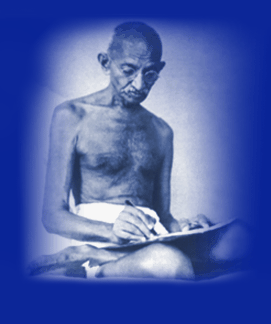
Thank You For Arguing has opened my eyes by showing me that rhetoric is truly found in every opinion and statement meant to persuade. Such influential people throughout history, like Gandhi, have used fallacies to get a point across and appeal to a greater audience. Even though fallacies are considered being fouls of rhetoric, it never fails to attract people form what is being proposed. I do not mean this in a negative way. I find that Gandhi's use of fallacies in London's Kingsley Hall was inspiring to all. Although hard to spot at first, further analysis of the text showed some examples of fallacies.
The first fallacy I spotted was the straw man fallacy. Gandhi trails off his main topic to a side story about the village of Mysore. This showed how Gandhi uses a distraction to talk about what he knows better from his own experiences rather than his statements on how God is the right ruler.
Tautology was also used mainly in his last paragraph. "Hence I gather that God is life, truth, light. He is love. He is the supreme Good. But He is no God who merely satisfies the intellect, if He ever does. God to be God must rule the heart and transform it." Gandhi repeats in different ways how God is ultimately good.
Finally hasty generalization can be found when Gandhi states, "whereas humble and mute acceptance of divine authority makes life's journey easier even as the acceptance of earthly rule makes life under it easier." He uses too few examples to interpret that following God's divine authority will make life easier. He expresses very few facts and examples to back that opinion up.
Nevertheless Gandhi uses these fallacies well to persuade his audience about God being the right choice to follow. His opinions of Him appeals to the audience of how great it seems to be under His control. Knowing about fallacies, I am eager to read more speechs by famous historical figures to identify their choice of manipulation.
Chapter sixteen and seventeen of Thank You For Arguing as introduced us to a skill that will be useful for socializing. We're steps closer to figuring out if someone is lying or if he/she really wants what is best for us. It isn't as sophisticated as reading people's expressions but much rather identifying if the persuader's need is the same as ours so we save ourselves from being manipulated. Though when being the persuader, it's a different story. Heinrichs also gives tips on how to avoid being caught. Always be in the middle of both extremes when proposing something. This will benefit you by seeming interested in your audiences needs and be trusted. It's easy to spot someone proposing the extremes giving off a radical position sending a signal to not be reckoned with. Everything seems to connect with each other. Using future tense you give your audience choices that benefit their needs. With this benefit, your audience will gain your trust and will appeal more easily to your persuasion.
In this scene from Family Guy we can see how both candidates appeal to their audience by saying what they want to hear and what they think they need. They are between extremes by not boring them with actual solutions and saying nothing but they are in between them, saying what the audience wants to hear. Of course this is satire however it proves Heinrichs point that giving the audience benefits and needs will make them more susceptible to being persuaded.
After months of hard work and campaigning, United States' President Barrack Obama has won his second term in office. His victory speech, other than inspiring, included much rhetoric that needed to be analyzed. To get the citizens the reassurance of the right decision Obama used fallacies for persuasion. His most obvious, and most successful for persuasion, fallacy was bringing an end to all their problems with hard work. This could work, though for now, you'd want the people's morale high. Despite his fallacies, Obama uses the past and future tense ably giving the people reassurance and something to expect in the coming years. It was great to see such a powerful speech being phrased by a great person.
Logic and rhetoric seem to of had enough of each other. Maybe not literally but it seems they are two different things. Logic tries to prove the right and wrong, giving the audience and the adversary straight answers. On the other hand, rhetoric gives the audience choices that are more susceptible for persuasion. Heinrichs makes this clear and directly introduces a new set of fallacies that run under these differences. These fallacies can distract a debate or turn into a fight.
Logical fallacies such as a person using facts against you instead of the topic, stating he can't be wrong because other people think so or the famous one because they have been believing it for a long time *cough* religion *cough* *cough*. Another fallacy Heinrichs goes into is the fallacy of power, "because the guy in charge wants it, this fallacy says, it must be good." (157). When you spot these fallacies you might end up fighting. To avoid getting stuck or using these fallacies it's good to use the present tense as it gives choices to the audience. "It's okay to use sermonizing, demonstrative rhetoric in a deliberative argument to get the audience on his side, but then the persuader should instantly switch to the future tense" (163). I mentioned in previous blogs about values and the present tense. It can be deadly to always be in the present as it will make your arguments harder to bring forward to audiences.
What your left with are discussions with asses. Literally. In this Family Guy scene the discussion is in present tense. The man is using logical fallacies, that work, to prove a point. Instead, the ass (sorry for my obscene words) is using his facts to attack the man instead of the topic and is also, what Heinrichs calls, "utter stupidity." The man is arguing against a fool.
Maybe, if the man used his rhetoric in future tense, the discussion would of not ended with so many NOs.
We have kissed our audiences' behinds enough while learning about ethos and pathos to get them close to our traps. Once we have proven our point, it's time to attack. Logos, it's nice to see you again. Facts and knowledge are key for the audiences' understanding of the subject, and what you want to gain from it. Heinrichs shows us a new form of logos, the use of syllogismsand his partner in crime enthymemes. You don't want to make your audience feel stupid, thus enthymemes come into place when you utilize syllogisms but it removes the logical part of your argument. For its full potential, try to use it when talking about a subject the audience knows well so they'll get it.
Heinrichs is right when he states, "Marketers use a kind of syllogism all the time." (124). It can be seen in this famous Old Spice commercial. Basically the commercial is telling you, mostly towards women, that if your man uses Old Spice Body Wash, he can make your wishes come true. I mean who wouldn't want a body wash that lets you find tickets in oysters to things you love?
I found it impressive how logos can be used in many ways to get facts and knowledge can be expressed. To finish the job off just add some stories, comparisons and facts when using inductive logic. Its opposite, deductive logic, uses a commonplace to reach a conclusion. Men who smell good generally pick up girls more on average than men who don't shower. See. Now you want to shower because before you might of not been successful in picking up girls. You're welcome.
It is said countless times in Thank You For Arguing and on my blogs: have your opponent agree with your point right from the beginning. Who is going to listen to someone brag about all the wonderful things he/she is getting? Unfortunately humans are a selfish and greedy species. They want nothing else than to satisfy their own needs. That is why it's important for a rhetorician to know what the audience wants and, as Heinrichs states, "convincing your audience that the choice you offer is most "advantageous" - to the advantage of the audience, that is, not you." (98). This comes in handy when you are up against someone in a discussion. To get the audience to back you up, you need to give them the best options for them to see you'll do a greater change for them.
When coming up agains your opponent, the best option is to persuade your audience that he/she is wrong. This is where logos comes in. You want to identify and reject your opposition's facts. "If facts work in your favor,use them. If they don't (or you don't know them) don't." (109). This can sometimes be tricky as hardly any human is a walking enciclopedia. But fret not, there is an answer. Redefine terms and facts when your opponent blows you away with his knowledge and add a bit of wit. Remember one thing, put your audiences needs before yours.
It is always important to know your stuff. Doesn't matter where you are or what it is, if it's expected from you then you should know it. No one likes talking to ignorant people. It's pretty hard and annoying to deal with when they're getting their facts wrong and making a fool out of themselves. Well, an audience don't want the same for a leader. When persuading a crowd you want to make sure you show them what they want to know. This will, as Heinrichs states, "show the audience that you know how to solve the problem at hand." (67). Who doesn't want a problem solver as a leader?
As a student, I am expected to exceed my struggles. This prepares me for my future when I need to confront everyday problems. Some people have more difficulty, some have it easier. My strategies to solve problems come from understanding how I dealt with them in the past. This is Heinrichs' "showing off your experiences." Sometimes more useful than knowledge, experience lets you analyze your past actions to correct mistakes or improve them.
The audience can be the key to success. When arguing, you sometimes want people to follow your ideals. That's why when persuading you want the full support of many people. By getting this you'll need extensive years of training, knowing their habitat and acting like them. Fortunately, it's simpler than that. The sixth chapter of Thank You For Arguing teaches you how to relate to the audience making them like, trust and follow you. "You simply must be seen to have the "right" values - your audience's values, that is." (57) Some how it sounds logical. People are known to trust people who share the same values with each other. Thus if you try to share the same values as your audience, they might actually be persuaded easier. Heinrichs also shows how to effectively pump your virtue for particular audiences. You should brag about yourself, reveal your tactical flaws, and changing your position when nothing's going your way.
People love to brag, even though some hate people who brag. Bragging helps "show how great you are, though it doesn't always work." (62) It's nice to share your accomplishments but tooting your own horn too many times might result into people walking away from the noise. This will surely make the audience think highly of you. Something that surprised me was the effectiveness of showing your flaws. Surely showing them might give your opponent the location of your weakness. However, according to Heinrichs, "it wins sympathy or shows the sacrifice you have made for the audience." (63) Showing you're willing show this will gain you trust from the audience. Finally, changing your side rightfully. This might save you from humiliation or might give you the reputation of a volti arepas. It's risky, that's why it's crucial for the right excuse and timing. I found these tools very interesting but at the same time controversial. Knowing how to use them might make you a savior of the people, or the villain.
The last hour and a half have been very crucial for both presidential candidates. It was their last debate before the United States Presidential elections. Though preferring to watch one of my T.V shows instead of this, I found it quite interesting. It did create the occasional laugh, scoff, sigh, whatever emotion it made you get, the use if rhetoric from both candidates was more than enough to keep track of. Ethos, pathos, logos, forensic, deliberative, and demonstrative were all shown, some more than others.
Heated as always, the debate contained a lot of forensic toward each other. Romney started by saying something about Obama "apologetic tour" around the middle east which caused Obama to back-fire Romney's "logos" with pure forensic blame proving it with his own logos. As this continued for some parts of the debate overall each candidate chose their weapon of choice.
Romney showed a lot of pathos trying to get the audience to side him by describing the U.S as having a "prosperous future, being blessed with a great military", and giving the american people choices to forget the mistakes Obama did in his four year period. Romney seemed to use these forms of rhetoric to boost himself into popularity seeing that he is doing these changes for the people and trying to have them against Obama.
Obama on the other hand used more forensic and logos. He blamed Romney for contradicting much of his statements he had done weeks before the debate. This helped him stun Romney for few seconds. His use of logos helped back his previous accomplishments he had done in his four year period as well as improve for his reelection. Obama seemed to use these forms of rhetoric to contradict and stun Romney and reach out to people on how facts and figures reflect upon his accomplishments as president.
Overall I found this final debat very interesting. I just can't wait to see who wins this years election after what seems to be a very close call.
After completing chapter four of Thank You For Arguing I have now achieve greater skills in persuasion. Even though it's as basic and domestic in life, increase in knowledge of utility never hurts. When persuading, people often use emotions and facts to get what they want or to prove a point. Now Heinrichs shows us how to use character, emotions, and logic to help achieve more successfully what you're aiming. Aristotle's three elements: ethos (character), pathos (emotion), and logos (logic) are all crucial for arguing. "Logos: Argument by logic. The first logical tactic we covered was concession, using the opponent's argument to your own advantage. Pathos: Argument by emotion. The most important pathetic tactic is sympathy, registering concern for your audience's emotions and then changing the mood to suit your argument. Ethos: argument by character. Aristotle called this the most important appeal of all - even more than logos." (Heinrichs 45). It is incredible how the use of each one of these tools shift the argument toward your side.
Family Guy is very famous for its satire and humor making it very enjoyable to watch. Occasionally it includes forms of rhetoric such as the ones described by Heinrichs. When I was browsing some videos on youtube, I came across this deleted scene from Family Guy. While laughing out loud, I could identify Aristotle's forms of rhetoric: ethos, pathos, and logos. Twenty seconds into the video we can start identifying forms of rhetoric. The lead seagull is trying to prove the other seagull's point of being able to be independent by showing how hunting is impossible with "webbed feet." He uses logos by identifying that seagulls are different from hawks who have claws. He also uses pathos when using logos by intimidating the other seagull by asking is he "was going to club a field mouse to death." Last but not least the use of ethos comes at the end when the other seagull tries to explain he was thinking and the leader counters by asking him if that was the best choice. There he questions the other's wittiness and trustworthiness. The leader wins by using all three forms of rhetoric. It seems that even children and animals are capable of persuading.
I would rather end a dispute with words than with fists. Well I bet I could take on anybody who is willing to mess with me (not really) but just thinking of the physical effort I'd have to endure, it's not worth it. Jay Heinrichs explains how arguing is much more easier and practical than fighting in the second chapter of Thank You For Arguing. His use and instruction of rhetoric shows how persuasion helps create an agreement to settle a dispute. Change of mind set, mood and willingness of the opposition helps achieve your goal in the argument without the necessity of changing his face...with your fists...or going to jail. "The basic difference between an argument and a fight: an argument, done skillfully, gets people to want to do what you want. You fight to win; you argue to achieve agreement." (Heinrichs 17). Heinrichs examples rhetoric in argument in today's society clarifies how to successfully pull this through. Such as "couples who stayed married seemed to use their disputes to solve problems and works out differences rather than the doomed couples who attacked each other." (Heinrichs 16). Now imagine if all the world would end its disputes with arguments. No more fighting, just exchange of words instead of bullets. These months and the next to come are very significant for Colombia as they are having their first-time-ever peace talks with Las FARCs. Finally after decades of fighting, men have come to reason to throw down their weapons and start agreeing.
Colombia's government's use of rhetoric might be very crucial to en this dispute with things leaning into their favor. They might have a better understanding in rhetoric which might give them the upper hand when winning the battle over agreements. "To win a deliberate argument don't try to outscore your opponent. Try instead to get your way." (Heinrichs 19). Las FARCs might get somethings that they want, but the government must ultimately get more in favor. Mood, mind and willingness are critical to get your priorities from the opposition. There's a long way to the end of these peace talks but an agreement and an end to disputes would mean everything for the country and continent. The best thing to do right now is to send the government a copy of this book and wait.
Finishing the lecture Butler gave me in the last few pages, his experiences have arrived. Don't get the wrong idea, I found all the information about the types of insomnia, the consequences and the causes very interesting ad can't wait to show what I learned with other people. After a whole load of logos being dumped onto one, ethos came along. Butler began to describe his characteristics as a sleeper. He shared his checklist he does every night when he goes to sleep. "Usually I like feet to be allowed out a certain bit from the end of my covers. They should never feel constrained." (Page 32). This shoves his seriousness a bit to the side while still keeping the formal register.
Using ethos makes the passage more friendly. I felt a connection with Butler as he explained his do's and don'ts while I nodded at the things I do too and smirked at the ridiculous other things. From this passage I see that Butler is trying to connect his audience more by making them know him better. Nothing beats a good lecture and an icebreaker.
Blake Butler has introduced his style of writing very straight forward. The seriousness of the passages in Nothing reflect his formal register. Everything he writes never breaks the seriousness he portrays. Only reading some pages, I have figured out that he is somehow working into finally making the transition from introduction to experience. Inferring that he is an insomniac, he compares objects, everyday-household objects with non-living things that never sleep. "The walls, doors, ovens, knives, etc.; they do not sleep, and they do not wish to." (Page 20).
When explaining something, Butler uses logos to back his descriptions up. An examples shows when he describes how people shift sleeping habits when changing from location to location. He backs this up with proof. " Subjects in sleep lab testing procedures have been found, out of their usual element, to exhibit the same mood and personality shift whether they had trouble sleeping their or not, despite the fact that the unsleepers did indicate higher heart rates, higher body temperature, and accelerated nervous system." (Page 21). He even puts foot notes at the end of some sentences to show where he got his information from. This makes me believe that this book is a mix between a memoir and a scientific essay.
The seriousness compares to his register and rhetoric mode. Logos makes the text more informative and serious and, the icing on the cake, formal register gives the final touches of a serious passage.
Bryan A. Garner and Robert Lane Greene spark a written dispute on how language should be properly used. Language is used everyday, all around the globe. The way it is used though, varies from place to place. Most of the time when using language, mistakes are ignored or even unnoticed. Both authors debate on how “descriptivists” and “prescriptivists” contrast. Garner, a prescriptivist, tries to tell the audience how to correctly use grammar while at the same time contrasts against Greene's ideals, a descriptivist, who describes grammar without criticizing the misuse. I must say that I agree with Greene as he tries to present the idea that "language must grow and change."There is evidence of this happening all around us. The increase of slang in younger generations shows how language evolves to fit comfortably in people way of expressing their opinions.
Both debaters use logos as their rhetoric mode. The present of other authors in their arguments are example of logos they used. The ideas of famous writers reflect well with their point they are trying to get across. There are many examples of debates that use logos to support their arguments. Many political debates are examples. "If I had the power, I’d now declare the Language Wars officially at an end." (Garner) He implies how this dispute over right and wrong in grammar might never end. There is so much to cover that it seems it might be the longest war ever.
Prescriptivists: adj. Attempting to impose rules of correct usage on the users of a language.
Descriptivist: adj. The doctrine that the meanings of ethical or aesthetic terms and statements are purely descriptive rather than prescriptive, evaluative, or emotive.
Permissive: adj. Allowing or characterized by great or excessive freedom of behavior.
Dogmatic: adj. Inclined to lay down principles as incontrovertibly true.
Solecism: noun. A grammatical mistake in speech or writing.
It really intrigued me how fast Blake Butler changes the mood in a matter of sentences. Reading the first few pages of Nothing gave me the idea that this memoir will unfold a story of the author that marked his life. The first few pages made a transition from happy and blissful moments to dull descriptions of his unconscious lifestyle. "Such kinds of aimless mental spin-all without an answer- is the kind so many nights that keep me up long after I lay down, stuck in inevitable fixation over nothing, pointless thinking." (pg 3) I quickly figure out that Butler tries to throw everything he's got about his troubles to the reader. This isn't the kind of books I pick up to read but I find change an interesting part of life. Therefore I have given myself the challenge to read something other than comedy or action. The formal writing compares well with its disturbed tone, giving the book a slight serious feel to it.
I find the topic of insomnia interesting because part of my family suffers from it. Learning more from it can be crucial to knowing how to deal with it hopefully what Butler will explain in Nothing. I am eager to read on to see if I'll learn new things. For now I'm sticking with this book. It looks like the only thing left to read is Nothing.
It looks like I have to be more careful when inserting a quotation into my passage. You never know what you might end up saying. Your message might be about saving the world but wrongfully putting a quote and bam, you are now against free speech. Okay, maybe a bit dramatic, but this is what I got out of Q As In Quotation. “From now on, another voice, a thinking significantly different from yours, will cast a shadow, making everything you’ve written so far as well as everything you will have to say in the future appear in a different light” (Q As In Quotation pg. 75). One must be careful when and what to add a quotation as in many times it can have a different perspective, ultimately contradicting what was previously intended. Analyzing something with a quotation can sometimes be harmful to the writer, giving the impression to the reader that the writer couldn't complete a profound analyzation of the passage.
I was surprised to find Survival of the Fittest not to be about evolution. Though after reading it thoroughly, I understood the intention of the title. As if going back to elementary with the dots and commas and semicolons, Nicholson Baker describes the history behind punctuation and its importance to language. "It even participates in those newer forms of emotional punctuation called "smileys" or "emoticons""(Survival of the Fittest pg. 2). As punctuation evolves, it still survives serving us the purpose to help clarify what is being portrayed at the reader.
These two essays relate with what we have been doing in class lately with quotation marks, paraphrasing and correct punctuation. It helps us become better writers because we start understanding our messages better and at the same time increasing our skills as speakers and writers.
"I'm standing in the doorway.
Okay.
I'm here."
*Turn the page*
Is that it? Is this the end? Noo!
But this blog entry won't finish like the book. Oh no.
Brent is finally living his life normally. He's seeing his friends again, staying at home and doing excellent progress. He is overall happy and seems to live his life with no problem. “Okay, so I can use my hands, arms, and legs. I can think. I can walk. I can talk. I’m fifteen. I’m alive. Life’s pretty good” (p. 292). Brent seems to reflect upon the bright side of his recuperation and not thinking about the negative aspects. It is clear that he has changed. With this change comes Brent's different emotions and the word choices the author makes to reflect upon this change. He even admits he has changed by stating that he doesn't belong anymore in the Children's Hospital when he came to visit them again. With this, Brent shows his confidence about going back to school even though he has some doubts. Though, his survival through psychologists, tutors and drug addicts in the final stages of his recuperation have carved him to a new man. "That feels so good. I'm going to be okay. I'm going to be okay." (p 318). His confidence at the end hints the reader that he is ready to confront his next challenge: Getting back to school.
I was shocked to find myself searching the book for more. I wanted more. I wasn't satisfied without knowing how Brent would survive Highschool, how he would confront problems and become a regular teenager. Having my hopes high, I hope Brent had a great experience in Highschool and became a different person learning from his mistakes. He deserves to have a great happy life. He fought for it and deserves the taste of success.
I decided to analyze Runyon's word choice throughout the book. I could see the change of words every time his emotions changed. Sometimes they made me laugh, other times they made me feel the same way he was describing himself and some times I just sat there saying, "Calm down Brenner." Runyon changes his attitude and emotions very often ranging from being angry to being horny. In every change of emotions, Brent uses his 'vast knowledge' of vocabulary to describe himself and his feeling about things and people around him. I have also seen that he somehow always has this same emotion to specific topics or persons. Brent is always angry talking about his accident to psychologists or explaining what has happened. When he talks about girls or the nurses in his life he has a lusty mindset thinking about his fantasies with them. And finally he expresses his grief, though very little, when he figures out the pain he has created because of the accident. The emotions can be different from each other but the words Runyon expresses at each different moment don't always change.
"That shit really pisses me off. Jesus Christ. Don't fucking talk to me about that shit." (p 309). I have seen that Brent curses a lot when he is angry. Well who doesn't? I can say that that doesn't surprise me. Though it does surprise me that he decides to put so much in the text. Sometimes I just have to laugh at the spontaneous bad words thrown to the reader. "God that feels so good. Jesus. God, I'm getting such a boner. I hope the towel isn't sticking straight up. Is it sticking straight up? Jesus, it is." (p 250). The teenager's mind at work. The choice of 'God' and 'Jesus' shows the reader the embarrassment he has towards his horny thoughts on the masseuse. I have seen that Runyon uses 'Jesus' both when he is angry and when he is embarrassed or fantasizing. Though looking at the context, you can figure the meaning behind the word.
Runyon's choice of words are unique and simple. He shows the thinking of the teenager he was and the one I am. I feel I can relate with Brent through his story by the way he thinks, speaks and acts. It seems word choice can control things in many ways.
Jobst Garments:noun. Trademark for a type of pressure wrap applied to control hypertrophic scar formation or lymphedema.
Inkblots: noun. Also known as the Rorschach inkblot test, it is a psychological test in which subjects' perceptions of inkblots are recorded and then analyzed using psychological interpretation, complex algorithms or both.
Blanched:verb. To cause something to turn white or become pale.
Yammering:verb. To talk volubly and loudly.
Hypertrophic:noun. A nontumorous enlargement of an organ or a tissue as a result of an increase in the size rather than the number of constituent cells.
Brent gets a chance to visit his home for the weekend. I expected Brent to feel nervous and negative about coming back to the site of the accident. Though Brent shows little emotion as he passes the bathroom. "The thing about being here, the strange thing about being here, is that I hardly ever think about what happened. I mean, I'm sleeping in the room right next to where everything happened, but I'm not even thinking about it." (p. 197) Brent feels confortable being back home even if it is for a few days. Though he is not confortable with himself. He is still self-conscious and finds it difficult to accept his true image. Even confronting people he knows while looking the way he does. "Just walking into a video store, but God, I just thought of something---what if I see someone I know. That would be terrible" (p. 203)
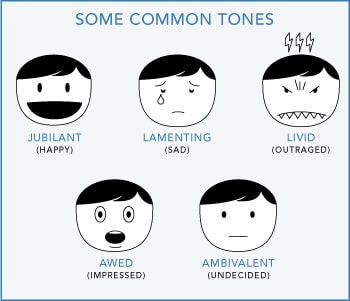
Runyon describes himself as being confortable and confident being back home. Despite his memories of that place he finds it nicer than the Institue. It seems he plays around with the choice of tone. There are parts in which he has an irritated tone: "They're both hugging me, but I didn't want this. I wanted to do something nice, but I didn't want all those tears. God, that's the last time I do something like that."(p. 203) a regretful tone, such as those explained in my previous blogs, and now, during his stay at home, a confident tone: “You would think I would be thinking about those things, but I’m not.” (p. 197)
My prediction of Runyon's change of tone correct. I closely looked how and when he changes it. Now all I have to do is pinpoint what tone he will use for Brent's true homecoming.
I was previously studying Macroeconomics and I couldn't help but notice how Brent's recovery and confort reflected on the Law of Demand. We have to variables, price and quantity demanded. In Brent's place we have recovery and confort. Law of Demand states that as price rises, quantity demand falls and vise versa. It seems to be the same for Brent, as recovery rises his confort falls. I just had to laugh at that. It seems strange how Brent's confort decreases even though he is making great progress with his recovery. There might be factors such as the change from the Children's Hospital to the duPont Institute. It might be he is more self-conscious of his actions and appearance. "At the Children's, I got really used to people seeing me naked, I didn't care who it was, Tina, Lisa, Barbara, even Reggie and Calvin, but here I feel a little self-conscious."(p. 150) Changing the way Brent feels at the moment, the choice of words and tone seem to have too.
Runyon has inserted much more regretful tone. Even before his transfer from the Children's Hospital, Brent had started to reflect upon his actions and thus changing the author's tone. Description of his sorrow and his anger with himself are all examples of how Runyon expresses regret into the story. “Someone who could jump into your body just when you were about to make the biggest mistake of your life and keep you from doing it. That would be great. That would be amazing. I wish that was true.” (p. 149)
I wonder if Runyon will change the tone at the end of the book. Until then I'm going to take a closer look at Brent's recovery and confort and see if that changes too. Lets see if he can set aside that Law of Demand that is currently holding him back.
It's hard to say goobye. There will always be the day where you'll have to end a chapter in your life. The time has come for Brent. After spending more than four months in the Burn Unit in the hospital, he was ready to move on, or was he? He started depicting the hospital as his home as he started to feel more and more confortable with the place and the people. "I don't know, I got used to everything and everyone, it seems like my home here now. I know this sounds crazy, but I don't really want to leave, I really don't." (Page 137). You could see how everything and everyone changed him while he was in the hospital. He showed how comfortable he had become. Though life is full of changes and one has to accept that.
You could say I'm pretty much of an expert on change. Living in eight different countries, moving every two years, and studying in five other schools has given me a taste of change. When people ask me how I can simply go away to a different country and start all over again I say it's normal for me. I was brought up that way and I have never actually fought with my parents for staying and settling down. Though I have now grasped the importance of settling down these past years as I lean closer to independence. Deciding to graduate here in Colombia has almost been my final choice but you never know. I too have felt Brent's unhappiness to leave a special place behind. It was a shock for me to leave from Italy to Colombia after having stayed three and a half years (the longest) there with friends and family so close. I had made myself confortable like Brent has, making friends and memories. But when every chapter closes another one opens.
Has Brent finally accepted his mistake? Advancing further into Runyon's recovery, he finally talks about his feelings toward his suicide attempt. Ultimately giving up on his excuses of why he did it he finally regrets his decision of hurting himself, as well as his family. "I kept thinking about it. I was in the bathroom and I had the gas can and the matches and I sat on the toilet. That's when I should've stopped it." (Page 105). His first signs of regret. This shows he is ready to accept his mistakes and carry on with his life learning from his mistakes. Though it still seems he is not yet ready to leave that part of him go. He plays the senario over and over again playing different scenarios of how that day could of played out. "I could have taken it off and gone back outside to play basketball with Craig... I could of just lit a little part of me on fire." (Page 105). Though we all live in the third dimension where time is continuous, a trip to the fifth dimension is what he needed.
I too have regrets. Getting in trouble with people, having fights and even making choices about what I should've eaten to not make me sick later. All those experiences had made me stay awake at nights thinking how it could've gone if I had done this or said that. As the times of mischievous Manuel have passed, I don't have to worry about getting into trouble for doing something bad or affecting myself or someone for acting out. Though now, as I have grown and matured, I spend sometimes wondering how an action would've affected my grades in classes and tests, more importantly in the PSATs and more important life decisions.
Brent, being only fourteen years old, might have not grasped the fundamental importance of how hurting one self can severely impact the future. Now having finally understood that his decision of hurting self was unwise, he will be thinking of recovering and learning from his mistakes. Maybe after all living in the fifth dimension wouldn't be that bad.
Therapy can be very frustrating. As I progress through Runyon's torturous recovery, I could feel his pain as I read every page. I got to the part where Runyon explained his accomplishment of walking for the first time in months. "I remember this. I remember how this is done. It's done by putting the weight on one foot and moving the other foot forward. It's basic. Simple to do. With one foot on the ground at all times and the other one moving very gently across the floor to match the first one." (Page 69). Runyon does not directly show his emotion towards his great accomplishment, though he shows it by expressing his parent’s emotions. It showed me that he’d rather show emotions expressed through his parents rather than himself in certain moments. “They both look at me like they’ve never seen me before and then like they’ve known me all my life. And now they’re both smiling and crying, and I’ve never seen them look so proud of me.” (Page 71).
Runyon’s walking therapy reminded me of a character in the T.V series Breaking Bad.
In Breaking Bad, Hank Schrader is involved in a shoot out and is left injured. He looses feeling and motion on both of his feet and needs therapy to recover. In Hank’s case his family is overly supportive and wishes all the best for him but he doesn’t have the same faith. After many scenes of him working hard on his therapy, his attitude is always the same, bitter. He doesn’t believe he will recover every movement and feeling in his legs. The only true motivation to keep going is the case of finding the methamphetamine dealer before the accident.
You could say both Runyon and Hank have different views on their recovery. While their accidents were different their feelings towards help and recovery are far from close. I could roughly say that the reason behind their accident might be the cause of their attitude. Runyon’s suicide attempt might have opened his eyes to what there really is to live for, motivating him to recover and forget his decision. On the other hand, Hank’s incapacity was the fault of the cartel that wanted him dead making him vulnerable and lowering his moral towards recovery. Even though I still don’t know if their final recovery will be the same, a success or a failure.
As I started The Burning Journals by Brent Runyon I thought to myself who could endur such pain as lighting themselves on fire and be left cooking until dead. Since a small child I always loved playing with candles and starting fires with paper and matches but even the small burns from wax or flames on my fingers were enough to keep away from fire. Once I had the experience of the rapid spread of fire when putting alcohol onto a campsite and feeling the heat whip my face. Luckily I was never burned so much as to have skin replacement as Brent needed after his accident. As bad as being burned alive is, witnessing it can be horrifying to, just as Dante did in the Seventh Circle of Hell.
"The First Zone is for the Blasphemers, who must lie prone on a bank of sand. The falling flakes of fire keep the sand perpetually hot, ensuring that the souls burn from above and below." (Canto XIV, Spark Notes) It is Dante who goes through Hell visiting all possible circles and experiences the sight of pain and suffering. In this particular circle, the blasphemers against God are tortured by being burned in a pit of flaking fire sand. As the sinners lay there smelling their flesh and soul burn, Dante stands witness of the consequences of blasphemy.
Now from what Brent felt for a couple of seconds, what might of felt like an eternity, would seem like paradise to those sinners being burned every moment for the rest of time. "I bring it closer to my wrist and then it goes up, all over me, eating through me everywhere. I can't breathe....I'm breathing water and smoke. I unlock the door and I open it. My hand is all black." (page 17)
"Stop tearing. They are tearing at me. Tearing away my skin." (page 26) His description made me cringe a little and thought about how my blisters from fires already made me tear up how would this make me feel.
Even though both Dante's Inferno and Brent's The Burn Journals contrast each other by being fiction and non-fictionimages when reading of burned bodies I always look back at that episode of CSI where they find a charcoaled body and as the camera zooms into his face his eyes open up and scarring a young boy for life, me.